
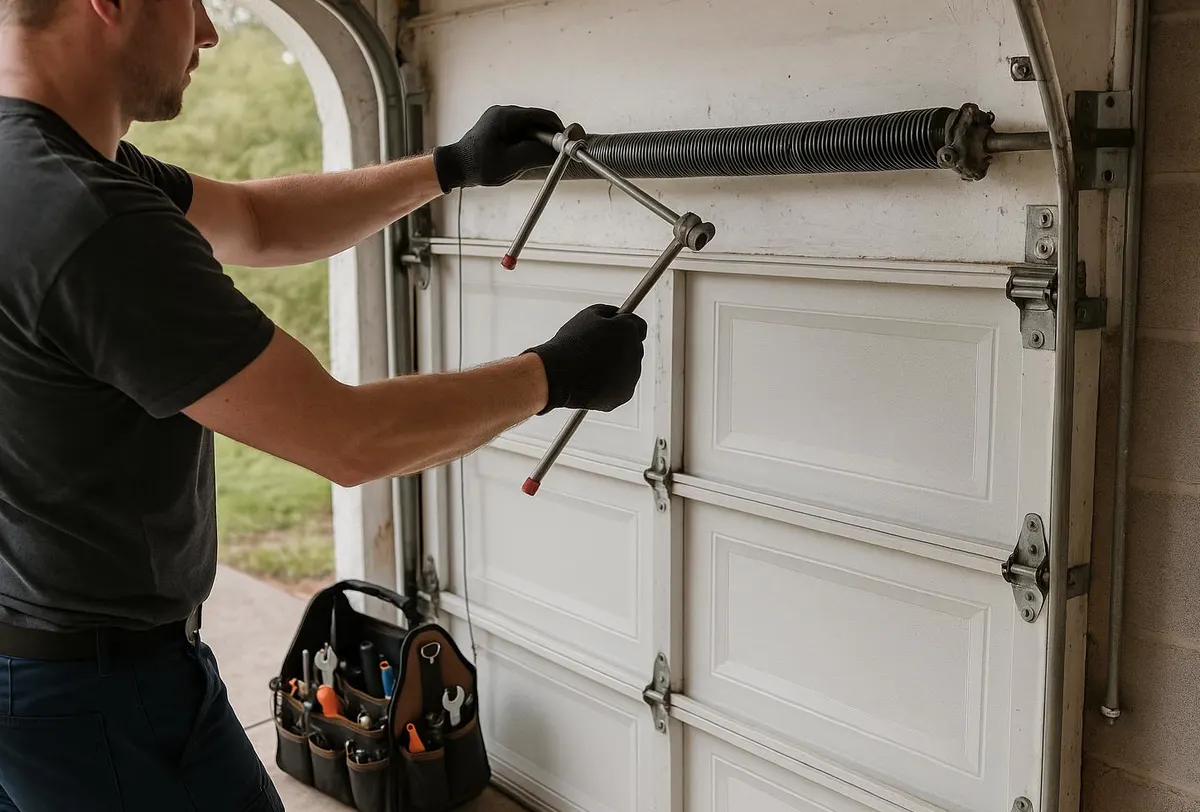
As a rule of thumb, lubricate every moving metal part of your garage door twice a year — once before winter, once before summer. The exceptions: if your door sees heavy daily use, faces direct exposure to road salt spray from a nearby driveway or street, or is original equipment on an older Denver-area home, check it every season instead. Freeze-thaw cycles and salt residue chew through old lubricant faster than most homeowners expect.
Tools and Products You'll Need
- A silicone-based garage door lubricant or lithium grease spray (sold specifically for garage doors)
- A clean, lint-free rag
- A soft-bristle brush (an old toothbrush works)
- Household vacuum or shop vac with a brush attachment
- Step stool (for track and spring-area access only — see below)
- Work gloves
Products to Avoid
- WD-40 — it's a degreaser and water-displacer, not a lubricant. It strips old grease away and evaporates quickly, leaving metal parts drier than before.
- Household oils (3-in-1, motor oil, cooking oil) — these attract dust and grit, and they thin out or gum up in temperature swings, which is exactly what Lancaster County winters bring.
- Grease not rated for garage doors — heavy automotive grease can be too thick for rollers and hinges, causing them to bind in cold weather.
Step-by-Step: Lubricating Your Garage Door
- Close the door and disconnect the opener. Pull the manual release cord so the door is fully under your control before you start.
- Clean the tracks first. Vacuum or brush out dust, leaves, and road grit, especially from the bottom few feet where salt spray and winter slush collect. Never lubricate dirty tracks — you'll just seal grime against the metal.
- Wipe down the rollers, hinges, and springs with a dry rag to remove old, hardened lubricant before applying new product.
- Spray hinges and roller stems (not the rollers themselves if they're nylon — see note below) with your silicone or lithium spray. Work the door up and down a few times by hand to let it penetrate.
- Lubricate the springs lightly along their full length, but only if you can reach them from the ground without a ladder positioned near the spring tension area.
- Apply a thin coat to the track rollers' bearings only, avoiding the track surface itself — lubricant on the track attracts dirt and can cause the rollers to slip rather than roll.
- Wipe excess product off every part. A thin, even coat outperforms a heavy one, and excess lubricant just drips onto your garage floor or driveway.
- Cycle the door by hand five or six times to work the lubricant evenly, listening for any grinding, popping, or uneven movement.
A Note on Rollers
If your rollers are nylon (most doors installed in the last 15–20 years), lubricate the stem and bearing, not the roller wheel itself — nylon doesn't need oil and excess product just collects grit. Older steel rollers, more common on original doors in older Denver-area homes, benefit from a light coat on the wheel surface too.
What's Safe for Homeowners vs. What Needs a Technician
Homeowners can safely handle hinges, rollers, track cleaning, and the opener's chain or belt rail (a light coat of the same silicone spray works there too). What's off-limits for DIY:
- Torsion springs under tension — lubricating them is fine from a safe distance, but adjusting, repositioning, or removing anything near them is a job for a trained technician. These springs store enough force to cause serious injury.
- Cables and the drum assembly — these are also under constant tension and shouldn't be handled by anyone without the right tools and training.
- Any part showing rust, fraying, or visible wear — lubrication won't fix a cable that's starting to fray or a spring that's corroded from salt exposure. That's a repair or replacement issue, not a maintenance one.
When to Call Denver Garage Door
If you've lubricated everything and the door still grinds, sticks, or reverses unexpectedly, that usually points to something beyond routine maintenance — a worn spring, a bent track, or an opener sensor issue. Our Garage Door Maintenance service covers a full inspection along with proper lubrication of tension components we don't recommend homeowners touch. If a spring is corroded or losing tension (common after a few freeze-thaw seasons), our Spring Replacement service gets it swapped safely and correctly, with the right spring rated for your door's weight.
If you're in Denver, Ephrata, Adamstown, Reinholds, Stevens, Terre Hill, East Earl, or Akron and your garage door needs more than a can of lubricant, give Denver Garage Door a call — we'll get it running smoothly before the first hard freeze hits.